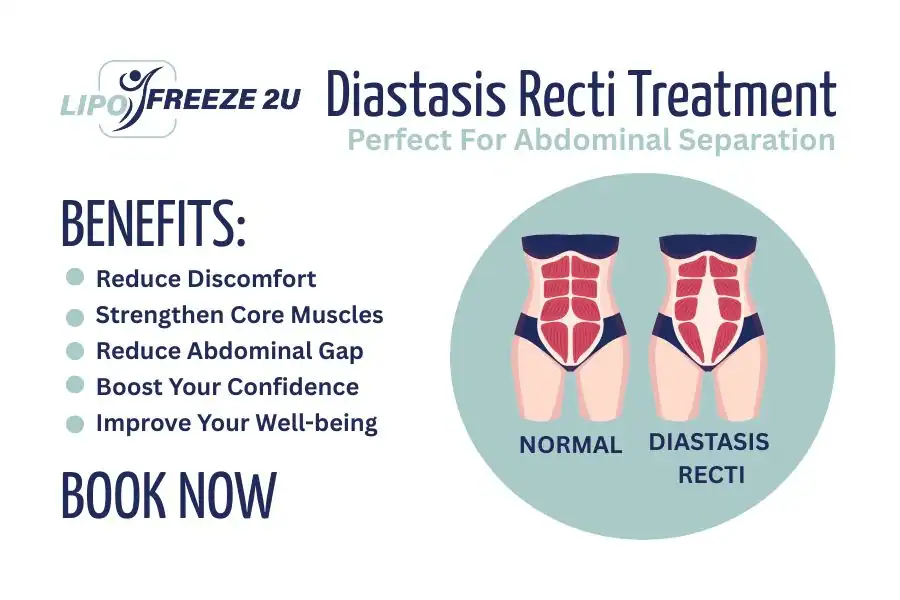
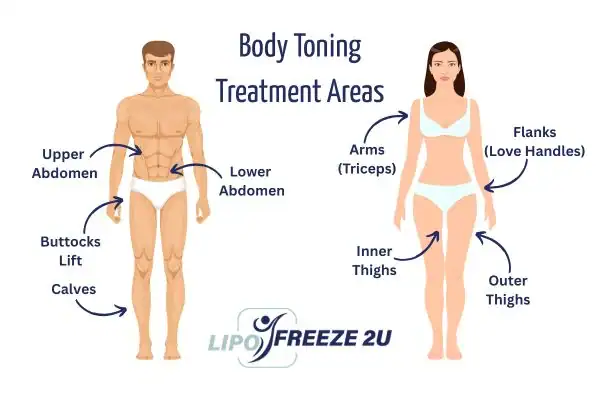
Here are the top 10 benefits of using LF2sculpt Body Toning Treatment at Lipofreeze for diastasis recti treatment Basingstoke.

Here are the top 10 benefits of using LF2sculpt Body Toning Treatment at Lipofreeze for diastasis recti treatment Basingstoke
- Non-Invasive: It is a non-surgical treatment that does not require any incisions, injections, or downtime. It means that patients can resume their normal activities immediately after the procedure.
- Improved Muscle Tone: The treatment stimulates muscle contractions in the abdomen, resulting in enhanced muscle tone and strength. It can help to reduce the appearance of diastasis recti and create a flatter, more toned belly. The best part is that you can return to your daily activities immediately after the separation of the abdominal muscles is treated. The supramaximal contractions from the LF2Sculpt body sculpt treatment help increase muscle mass and reduce abdominal muscle separation.
- Fat Reduction: In addition to improving muscle tone, it can also help to reduce stubborn fat in the abdomen. It can further enhance the appearance of the belly and improve overall body contouring.
- Quick Results: Many patients begin to see results after just one treatment. However, optimal results are typically achieved after a series of treatments.
- No Downtime: The treatments are quick and easy, and patients can resume their normal activities immediately after the procedure. It makes it an excellent option for busy individuals who cannot afford to take time off for recovery.
- Non-Painful: It is a painless procedure that does not require any anaesthesia or sedation. Patients may experience a mild tingling sensation during the treatment, but this is not painful.
- FDA-Approved: It has been approved by the FDA for the treatment of diastasis recti and other muscle-related conditions. It means that it has been deemed safe and effective for use in clinical settings.
- Long-Lasting Results: The results of LF2sculpt Body Toning Treatment can last for several months, with many patients reporting long-term improvements in muscle tone and body contouring.
- Customisable Treatment: LF2sculpt Body Toning Treatment can be tailored to meet your needs. It means that each treatment plan is unique and tailored to the specific needs of the patient.
- No Scarring: Unlike surgical procedures, LF2sculpt Body Toning Treatment does not leave any scars or visible marks on the skin. It means that patients can achieve a more toned and contoured belly with no visible evidence of treatment.
You may wonder how many sessions you will need to treat diastasis Recti Basingstoke?

To effectively treat diastasis recti, it is recommended to undergo at least 4 LF2Sculpt sessions. However, the number of sessions required may vary depending on the severity of the condition and the individual’s response to the treatment. It is best to consult with a medical professional for a personalised treatment plan.
Frequently Asked Questions: LF2Sculpt Body Toning for Diastasis Recti Basingstoke

1. Can LF2Sculpt Body Toning actually reduce the gap caused by diastasis recti?
Yes — LF2Sculpt Body Toning uses high-intensity focused electromagnetic (HIFEM) energy to induce powerful, supramaximal contractions in the abdominal muscles. These contractions can help rebuild muscle tone and bring the separated rectus muscles closer together.
However, it’s important to note that evidence shows modest reductions in muscle separation (often a few millimetres).
Your results vary depending on tissue elasticity, the consistency of the treatment, and the severity of the stomach muscle separation.
2. How many LF2Sculpt Body Toning sessions are needed to see measurable improvements?
A typical protocol involves four sessions spaced over a few weeks.
Many patients notice an improvement in muscle tone or a slight narrowing of the gap after the second or third session.
Peak results often manifest in the weeks following the final session, as tissue adapts and remodels.
3. Is LF2Sculpt Body Toning safe? What side effects can you expect?
LF2Sculpt Body Toning is generally considered non-invasive and well-tolerated.
Common mild side effects may include:
- Temporary muscle soreness or fatigue (similar to after a workout)
- Mild redness or tingling in the stomach
- Minor tenderness or warmth for a short period
Because diastasis recti is a condition affecting the abdominal wall, it’s wise to screen for contraindications (e.g. recent abdominal surgery, metal implants, certain medical implants) before treatment.
4. How long do results last, and will maintenance sessions be needed?
Results may last several months to a year or more, depending on your lifestyle, muscle usage, and whether you maintain strength training. Some clinics report sustained improvements at 6 months post-treatment.
To preserve gains, many practitioners recommend maintenance treatments every 3–6 months or combining LF2Sculpt Body Toning with ongoing core exercises.
5. Who is a good candidate — and who should avoid LF2Sculpt Body Toning for diastasis recti?
Good candidates typically:
- Have mild to moderate muscle separation (not extremely wide gaps)
- Are at least several months postpartum (healing phase completed)
- Have realistic expectations (improvement, not guaranteed full closure)
- They are generally healthy and cleared for electromagnetic therapies
Cautions / not suitable for:
- Recent abdominal surgery (e.g. C-section) — requires sufficient healing time
- Severe Diastasis that may require surgical intervention to repair fully
- Patients with metal implants, pacemakers, or electronic medical devices in or near the treatment area
- Women who are pregnant or breastfeeding (consult a physician first)
Why do people get Diastasis recti Basingstoke?

Diastasis recti is a common condition that occurs when the abdominal muscles separate due to increased pressure on the abdomen. It can happen during pregnancy, as the growing uterus puts strain on the abdominal muscles, causing them to stretch and weaken. It can also occur in people who are overweight or obese, as excess weight can put pressure on the abdomen.
Additionally, certain activities that involve repetitive or strenuous movements of the abdomen, such as heavy lifting or specific exercises, can also contribute to Diastasis recti. Age and genetics may also contribute to the development of this condition.
Another factor that can contribute to Diastasis recti is poor posture and improper spinal alignment. It can result in a weakened core and increased pressure on the abdominal muscles.
It’s important to note that while Diastasis recti commonly occurs during pregnancy, it is not an inevitable consequence of childbirth. With proper care and exercise, many women can prevent or heal their Diastasis recti postpartum.
Overall, there are various reasons why people may develop Diastasis recti, but it is often a combination of factors that contribute to this condition. It’s essential for individuals experiencing symptoms of Diastasis recti to consult with their healthcare provider for proper diagnosis and treatment options.
How long do LF2Sculpt Diastasis recti Basingstoke treatments last?

The length of an LF2Sculpt diastasis recti treatment Basingstoke can vary depending on the individual’s specific case and the severity of their diastasis recti. On average, a single session can last anywhere from 20 to 30 minutes.
Typically, multiple sessions are needed for optimal results, with most individuals undergoing four to six treatments spaced out over several weeks. It is essential to discuss your treatment plan and duration with your healthcare provider to determine what will work best for your body and condition.
How soon will you see results from your LF2Sculpt Diastasis recti treatment?

The amount of time it takes to see results for diastasis recti from LF2Sculpt treatment can vary depending on the individual’s specific circumstances. Some patients may start to notice improvements after just one session, while others may require multiple sessions before seeing significant changes.
It is best to consult with a trained healthcare provider for personalised recommendations and expectations for your specific case. Additionally, consider opting for our home-based treatment to ensure you never miss a session and can tailor your treatment plan to your current commitments.
Will LF2Sculpt permanently close the muscle gap in my stomach from diastasis recti Basingstoke?

LF2Sculpt is a non-invasive procedure that uses high-intensity electromagnetic energy to stimulate muscle contractions in the targeted area. While it can help strengthen and tone muscles, it is not a permanent solution for diastasis recti.
In summary, while LF2Sculpt can improve muscle tone and strength, it cannot permanently close the muscle gap caused by diastasis recti. Consult with a plastic surgeon to determine the most suitable treatment plan for your individual needs.
How soon after giving birth can a mother have LF2Sculpt to treat Diastasis Recti?
It is recommended to wait at least 6-8 weeks after giving birth before starting LF2Sculpt treatment for diastasis recti. It allows the body enough time to heal and recover from childbirth. Additionally, consulting with a physician or physical therapist is essential for determining the appropriate timing for LF2Sculpt treatment, as every individual’s postpartum recovery is unique.
Some women experience pelvic floor dysfunction and sexual dysfunction, and a sense of control lost in incontinence after labour. For postpartum women, postpartum rehabilitation is essential for their physical and mental well-being.
To improve your physical health, muscle strength, and body confidence after childbirth, LF2Sculpt offers powerful muscle contractions that provide significant advancements and aesthetic improvements, as approved by women’s health physiotherapists worldwide.
How does LF2Sculpt repair Diastasis recti and remove unwanted fat on the stomach?
Diastasis recti, also known as abdominal separation, is a common condition that occurs during pregnancy or after childbirth, where the abdominal muscles separate and cause a bulge in the midsection.
LF2Sculpt is a non-invasive body sculpting procedure that uses high-intensity focused electromagnetic (HIFEM) energy to stimulate muscle contractions in the targeted area. These muscle contractions are similar to intense workout sessions and can help strengthen and repair the weakened abdominal muscles in patients with Diastasis recti.
By targeting the abdominal muscles with HIFEM energy, LF2Sculpt helps to improve muscle tone and tightness, which can reduce the appearance of Diastasis recti. It results in a flatter and more toned stomach.
Additionally, LF2Sculpt HIFEM technology also targets unwanted fat on the stomach. The intense muscle contractions caused by LF2Sculpt not only strengthen muscles but also increase metabolism and burn fat cells. Over time, this can lead to a noticeable reduction of unwanted fat in the stomach area.
Moreover, as LF2Sculpt works on both muscle toning and fat reduction simultaneously, it can provide quick and effective results for patients seeking to address both concerns.
In summary, LF2Sculpt can effectively repair Diastasis recti by strengthening weakened abdominal muscles through intense muscle contractions. It also helps remove unwanted fat on the stomach through increased metabolism and targeted HIFEM energy.
How soon after giving birth can a mother have LF2Sculpt to treat Diastasis Recti Basingstoke?

It is recommended to wait at least 6-8 weeks after giving birth before starting LF2Sculpt treatment for diastasis recti. This allows the body enough time to heal and recover from childbirth. Additionally, consulting with a physician or physical therapist is crucial in determining the optimal timing for LF2Sculpt treatment, as every individual’s postpartum recovery is unique.
It is also important to note that LF2Sculpt treatment alone may not be sufficient to resolve diastasis recti completely, and it should be combined with other exercises and techniques recommended by a healthcare professional.
How does LF2Sculpt repair Diastasis recti Basingstoke and remove unwanted fat on the stomach?

Diastasis recti, also known as abdominal separation, is a common condition that occurs during pregnancy or after childbirth, where the abdominal muscles separate and cause a bulge in the midsection.
LF2Sculpt is a non-invasive body sculpting procedure that uses high-intensity focused electromagnetic (HIFEM) energy to stimulate muscle contractions in the targeted area. These muscle contractions are similar to intense workout sessions and can help strengthen and repair the weakened abdominal muscles in patients with Diastasis recti.
By targeting the abdominal muscles with HIFEM energy, LF2Sculpt helps to improve muscle tone and tightness, which can reduce the appearance of Diastasis recti. It results in a flatter and more toned stomach.
Additionally, LF2Sculpt HIFEM technology also targets unwanted fat on the stomach. The intense muscle contractions caused by LF2Sculpt not only strengthen muscles but also increase metabolism and burn fat cells. Over time, this can lead to a noticeable reduction of unwanted fat in the stomach area.
Moreover, as LF2Sculpt works on both muscle toning and fat reduction simultaneously, it can provide quick and effective results for patients seeking to address both concerns.
In summary, LF2Sculpt can effectively repair Diastasis recti by strengthening weakened abdominal muscles through intense muscle contractions. It also helps remove unwanted fat on the stomach through increased metabolism and targeted HIFEM energy.
Does LF2Sculpt work well with Physio to repair Diastasis Recti Basingstoke?

What is diastasis recti Basingstoke?
There is limited research on the use of LF2Sculpt for repairing Diastasis recti, but some studies have shown that it may be effective when used in combination with physiotherapy. LF2Sculpt can help strengthen the abdominal muscles, thereby improving the function and appearance of the abdomen.
However, it is essential to consult with a qualified physiotherapist to determine if LF2Sculpt is an appropriate treatment option for you and to develop a personalised plan that combines LF2Sculpt with other physiotherapy techniques to repair Diastasis recti effectively. It is also important to note that LF2Sculpt should not be used as a substitute for traditional physiotherapy exercises and techniques.
What is diastasis recti?
Diastasis recti is a condition that occurs when the two halves of the rectus abdominis muscle separate due to excessive stretching or weakening of the connective tissue (linea alba) between them. This condition is commonly seen in pregnant women and can also occur in individuals who engage in intense abdominal exercises without proper form.
The muscles that are affected by diastasis recti include the rectus abdominis, transverse abdominis, and the internal and external obliques.
How does diastasis recti affect the body, and why do you need to get it treated?

It is essential to treat diastasis recti because, if left untreated, it can have long-term consequences for overall health and well-being. Weakened abdominal muscles can make it challenging to perform daily tasks effectively and increase the risk of lower back injuries.
Furthermore, diastasis recti can also impact pelvic floor function due to its connection to the abdominal muscles. It can lead to problems with urinary incontinence and pelvic organ prolapse.
Additionally, if you are planning on getting pregnant again after experiencing diastasis recti during a previous pregnancy, having this condition untreated may worsen with subsequent pregnancies.
Does Diastasis recti affect back pain and incontinence issues?
Diastasis recti, also known as abdominal separation, occurs when the connective tissue between the abdominal muscles stretches and weakens, causing a gap or separation between the muscles. This condition is commonly associated with pregnancy and can lead to a bulging belly and weakened core.
While diastasis recti primarily affects the appearance of the abdomen, it can also have other effects on the body. One common question is whether this condition can contribute to back pain and incontinence issues.
The answer is yes, diastasis recti can indirectly affect back pain and incontinence issues. When the abdominal muscles are weakened and separated, it can impact the function of the surrounding muscles that support the spine. This lack of support can contribute to lower back pain.
In addition, a weak core due to diastasis recti can also lead to poor posture and alignment, which can further contribute to back pain.
Individuals with diastasis recti need to consult a healthcare professional for proper guidance before starting an exercise routine or treatment plan. With proper care and management, both back pain and incontinence issues associated with this condition can be improved.